

Robert Lowell, one of my poetry heroes, called him “the most important Irish Poet since Yeats.” The Belfast Telegraph claims him as one of their own, since he grew up in Northern Ireland, in the village of Bellaghy, and will now be buried there in south Derry. Dublin seems to claim him since he lived, and now has died there on the 30th of August, just a few days ago. There are countless obituaries in publications across the globe. As if you really need one more link in this post, here is a rather thorough one from the BBC, and another very thoughtful one from The Guardian.
It seems to be up for debate just how political he became or remained since the time of the Troubles in Northern Ireland. I am still studying this topic myself, but it seems whatever his political leanings, he was known and is widely remembered as a kind, welcoming, and sympathetic man.
His books of poetry, his translations, poems and essays are required texts in schools, right alongside Milton and Shakespeare. His awards are numerous, including the Nobel Prize for Literature and the T.S. Elliot Prize. Among his many teaching appointments was a time as the Professor of Poetry at Oxford University. There seems little doubt that Heaney was one of the world’s most, if not the world’s most widely known living poet in recent decades.
Now for my confession: I have not been much of a Heaney fan. Sacrilege, I know, but I think I am coming around as I’ve been reading him for days now, and listening to his readings online, since his death on Friday. Aside from my absolute love for his translation of “Beowulf,” and perhaps a few poems, like “Blackberry Picking,” I just couldn’t get into Heaney, for years. Perhaps it was the many Irish idioms that required me to do a lot of research just to understand the basics of his rural life in Derry. Perhaps it was my lack of knowledge about the finer details of the Troubles in Northern Ireland. Whatever the reasons, sometimes a poet doesn’t speak to you at a certain time of life, even if your mentor gives you all of his Heaney books before he dies.

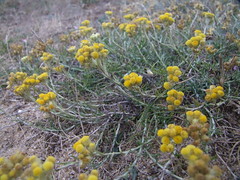
Sorry, George, I am finally catching up, including the reading of his 1991 collection, Seeing Things. And as I read the poem “Song” I took the time to look up the Rowan Tree and see why Heaney would liken it to a “lipsticked girl,” and why the Imortelles (wild flowers) were something he associated with “perfect pitch.” I suddenly find myself in love with the poem. And after listening to the man himself read “The Blackbird of Glanmore,” well, being a lover of birds, how could I not fall for this poem, or his lovely musical way of reading it?
I confess that the first reading of mine below lacks some of the music that you may hear in the voices British readers. I love how Heaney’s enjambed lines are so beautifully rhymed and metered, but a flaw of being an American reader seems to be our way of blending one line into the next too quickly. Spokenverse’s Tom O’Bedlam has some good points about that in the description of his reading of “Twice Shy.”
And one more link before my recordings, here are 11 videos of Seamus Heaney reading his work for you to enjoy when you have time. They helped me start to appreciate this prominent writer a bit more.
To read along, click here to open a new window for the text of “Song,” and here for “Follower.”
Related articles
- Seamus Heaney’s death is a huge loss to the world of poetry (southbankcentre.co.uk)
- Seamus Heaney: 1939-2013 (PoeticallyVersed.com)
- Irish Poet Seamus Heaney Dies : NPR (joshuakeiter.com)
- Seamus Heaney ~ Weaving Words within my Heart (thesilvervoice.wordpress.com)
- Meeting Seamus Heaney (conradbrunstrom.wordpress.com)


Leave a reply to slpmartin Cancel reply