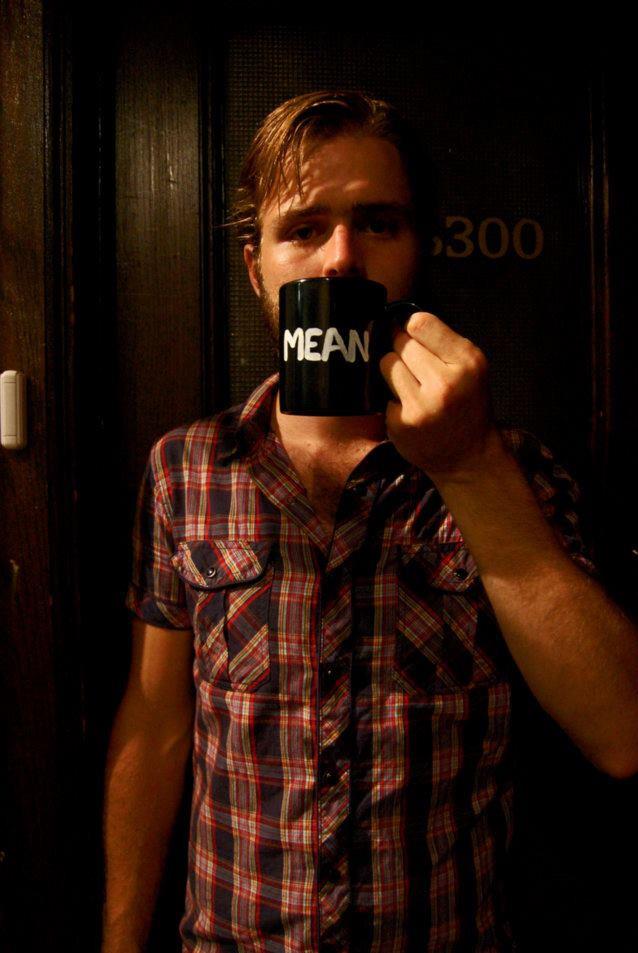
I want to thank you my readers for being such amazingly polite and kind participants in the public discussions we have here from time to time on The Dad Poet. It’s not that you don’t have strong opinions. You do, and obviously so do I, but I am consistently impressed by your ability to respect others in the conversation while making the case for an apposing point of view. It takes not just tact, but class and character to do that in this increasingly hostile world of internet discourse.
I really don’t like the way people talk to each other on the internet. Of course, that’s a broad sweeping statement, Much internet discussion is inspirational, provocative, educational and constructive. If it weren’t I don’t think I could spend as much time as I do here. It’s not that negative opinions are not valuable, but that they are so rarely presented in a constructive manner.
Even a decade ago, when I ran a web forum for gay fathers, I was amazed at how outright rude and thoughtless and unnecessarily unkind people could be when talking to people on the other side of a computer screen, and I vigorously encouraged an attitude in the forums that involved envisioning the other person at the kitchen table with you over coffee, and to frame their disagreements accordingly. Perhaps it is different when the person is a true adversary, but how productive is it for us to be the first to attack?
Good lord, when did we forget we were talking to other human beings? And why do people think you can say instantly in writing what you would think twice about saying in person? But it seems that it is more than internet anonymity that fosters bad manners. Perhaps we have encouraged by the adversarial tone of the articles themselves. Even respectable publications will post strong opinion columns that go well past the territory of assertiveness and into the badlands of insult. Some of them do so with great authority, like this article in the Guardian by British poet Carol Rumens who claimed that Richard Blanco’s inaugural poem was a flop. If you are really bored you can scroll down through the comments and easily find multiple responses (at least four) by me, not just to the review, but to a few of the respondents. I was wondering, what happened to polite public discourse and why were these people being so mean?
Earlier this week I read another poetry-based discussion that illustrated this tendency we have to give knee-jerk rather than thoughtful responses, often only reading a headline or skimming an article before we angrily chime in with our own oh-so-important opinions. Please read the post by James. I only copy my response here in an attempt to correct several typos. I confess I am struck by my own temptation to be more firm than perhaps I needed to be. Maybe I go too far? It’s no wonder I’ve been called arrogant when I start a comment the way I did here:
I’m going to risk sounding snarky, but let me be the first one to actually respond to you. Respondents thus far appear to have either merely skimmed your post or simply read your headline. It’s upsetting how many people do that. I wish I could say it was just on the internet, but I’m seeing it more and more in face-to-face talk. The TED talk philosopher you linked to makes many good points; we don’t argue productively anymore. It’s not simply, as I initially thought, the anonymity thing, that makes us prone to say things we would never say to a person sitting across the coffee table from us. I think the comments in your thread so far show that one of the reasons is that we often don’t actually listen to each other before we speak. I hadn’t thought of this aspect, though my concerns have echoed yours about the new trends in internet “discourse.” Perhaps it’s not merely rudeness, but a result of training to respond to snippets and talking points. But then again, we do need to be responsible to rein ourselves in and listen to each other before we chime in, don’t we? Can we really get away with just blaming the short form of tweets and blurbs?
Let’s put aside the fact that as a poet I cringe when I hear someone like Alexander above say that for him poetry has to rhyme. Sigh. Most of Walt Whitman and even many classics, the un-rhymed blank verse of Samuel Taylor Coleridge, for instance, apparently are not poems to Alexander and to many of those who responded critically to Hilborn. And we can just toss out most modern poetry either published or promoted by organizations like the Poetry Foundation and The Academy of American Poets. And he cannot tell me that Hilborn’s poem doesn’t “flow.” It might not scan as regular meter, but it certainly flows. And it has the metaphor and emotion of poetry, so while it may not seem traditional, doesn’t Alexander make a great argument, despite himself, that it really is poetry because it has the same effect. It seems to me a bit like saying, “Hey, honey, I’m not in love with you, but you give me goosebumps, and make me want to buy flowers for you; I want to see you happy, and hey, will you marry me?”
And a couple of people here have also used the term “fake,” which you and Hilborn have already addressed very well. But let me ask, since when were poets entirely truthful? Or let me rephrase that; since when were poets concerned with facts when they are getting at the truths of human emotion? Why do so many assume that poets are speaking as themselves and not as characters who may or may not be based upon themselves and others they know? Perhaps this misconception is ironically a result of the excellence of the poet’s writing and quality of performance. When an actor steps on stage nobody shouts, “He’s a fake!” Why would you expect other artists to only spit out historical fact rather than an exploration of what it means to be human? Just because something doesn’t fit your experience of OCD, or your “personal definition” of poetry, it doesn’t give you the authority to dismiss this poet or his poem.
Neither does it give you a pass for ignoring your manners by responding and arguing without actually listening to the other person and considering what he is saying. We could argue and discuss things so much better and more productively than we do. Let’s hope that this trend continues to be bucked, and that we as a society are able to learn and grown and make the social corrections necessary to benefit from our initial blunders in this new world of technology and instant speak.
Thanks for this post and the great opportunity for discussion.
Here is the poem as performed by Neil Hilborn:
Here is the TED discussion about how we argue by Daniel H. Cohen:
I ask you to listen to the poem by HIlborn, even if slam poetry is not your cup of tea. You might even scroll through a few of the YouTube comments, but I don’t encourage wading in too much of the filth. Read the post by James Grimshaw, to whom I was responding. Feel free to tell me if you think I was being unfair to those who made comments on his post. I can take it.
Then I’d like you to listen to Cohen’s talk, paying particular attention to his ideas of how “argument as war” is not a helpful model for modern public discourse, and particularly for our purpose, internet discourse.
Then talk to me about it. And since you’ve been so good as to consider all this stuff as presented, I give you a free pass to discuss all or any part of it–the question of what poetry really is, the problems or positives of internet discourse, whatever you are moved to discuss. I know I’ve asked a lot of you, and you can give me as much guff as you see fit for that, because know you’ll keep it respectful and useful; you always do.
Thanks!
Related articles
- Neil Hilborn’s ‘OCD’ Love Poem Counts 1.2 Million Views (mediabistro.com)
- ‘That’s Not Poetry’: A Response to the Response to the Response to Neil Hilborn (grimshawwrites.wordpress.com)
- Guide to Online Etiquette (Reputation.com)
- Perfect Internet Comment Etiquette (DailyDot.com)
- How to recognize a poet (imadealiyah.wordpress.com)
- Poetry Isn’t as Useless as a Lot of Poets Say It Is (theatlantic.com)
- The Decline of the Decline of American Verse (examiner.com)
- A Few Thoughts on Internet Discourse. (ukwillmcavoy.wordpress.com)
- SciTechTalk: Are Internet trolls the price we pay for free speech? (upi.com)
- Applauding Huffington’s `no trolls’ policy (lorensteffy.wordpress.com)


Leave a reply to John Cancel reply